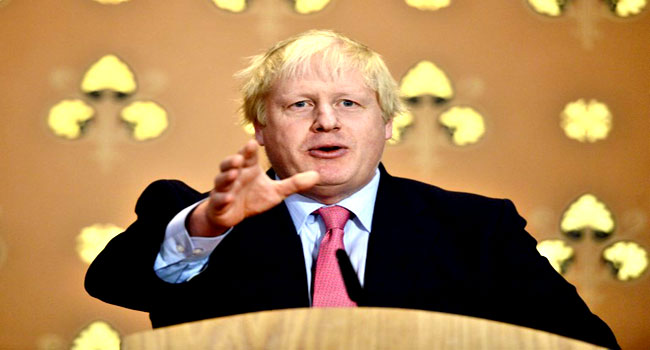
Former Britain’s Foreign Secretary Boris Johnson
Britain’s
Boris Johnson confirmed Thursday he will seek to become prime minister
when Theresa May quits, reports said, as she promised to set out a
departure timetable early next month.
“Of course I’m
going to go for it,” the former foreign minister, ex-mayor of London
and leading Brexit campaigner told a business event in Manchester,
northwest England, the BBC and Sky News reported.
The decision
comes as little surprise as Johnson, one of Britain’s most identifiable
politicians known simply as “Boris”, has long been known to covet the
top job.
But it effectively fires the starting gun on a race that
already has more than a dozen runners and riders — even though there is
no official vacancy.
May has promised to step down once the first
stage of Britain’s exit from the European Union is secured, but this has
been put in doubt by repeated Brexit delays.
At
a meeting of senior members of her Conservative party on
Thursday, May resisted growing demands to set out a detailed plan for
her departure right now.
But Graham Brady, the chairman of the
1922 Committee of Conservative MPs, said May would do this after a
parliamentary vote in the week beginning June 3 on legislation to
approve her EU divorce deal.
“We have agreed that she and I will
meet following the second reading (first vote) of the bill to agree to a
timetable for the election of a new leader of the Conservative and
Unionist Party,” he said.
Many of May’s ministers and senior
lawmakers are already making moves for the leadership, holding photo
opportunities and giving wide-ranging speeches that go well beyond their
official briefs.
Johnson, who botched his chance to run
against May when she took office after the 2016 referendum, has long
been assumed to be a candidate but has recently kept out the limelight.
Known
abroad for his gaffes and accused of misleading voters over Brexit, he
is nonetheless loved by many ordinary members of the ruling Conservative
party, who will have a say in their new leader.
Johnson quit as
foreign minister last year over the government’s Brexit strategy and has
been an outspoken critic of the divorce deal May struck with Brussels
last November.
The deal has been rejected three times by the House of Commons, forcing May to delay Brexit twice.
She
announced this week she would put it to MPs for a fourth time in early
June, in the form of a vote on the Withdrawal Agreement Bill.
May hopes
the bill could be passed by July, allowing Britain to leave the EU at
the end of that month, and is expected to step down at that point.
If the plan is rejected again next month, however, few expect her to hold on that long.


Comments
Post a Comment